Category: Uncategorized

  • 10 Time Management Mistakes That Are Killing Your Productivity

    10 Time Management Mistakes That Are Killing Your Productivity

    “Managing your time wisely is the foundation of lasting productivity.”

    Introduction

    Have you ever reached the end of the day feeling busy but wondering where all your time went?how to manage time?

    You’re not alone.

    Many people believe they need more hours in the day to become productive. The truth is that productivity isn’t about having more time—it’s about managing the time you already have.

    Successful entrepreneurs, creators, students, and professionals don’t have extra hours. They simply use their time more intentionally.

    Unfortunately, many of us develop habits that silently waste hours every week. These habits reduce focus, increase stress, and prevent us from making meaningful progress toward our goals.

    In this article, we will discover the 10 biggest time management mistakes that may be hurting your productivity—and practical ways to fix them.

    1. Starting the Day Without a Plan

    Imagine beginning a road trip without knowing your destination.

    That’s exactly what happens when you start your day without a plan.

    Many people wake up, check their phone, respond to messages, and begin random tasks. Before they realize it, half the day has passed without completing anything important.

    A simple daily plan gives your day purpose and direction.

    Instead of asking, “What should I do next?” you already know your priorities.

    https://sandeepblogging.com/7-morning-habits-increase-productivity-focus/

    How to Fix It

    Every morning, write down your Top 3 Most Important Tasks (MITs).

    These should be the tasks that will move you closer to your personal or professional goals.

    Keep the list realistic.

    Completing three important tasks is far more valuable than writing twenty tasks and finishing none.

    Benefits

    •Clear priorities

    •Less stress

    •Better focus

    •Higher productivity

    “Planning your day gives every hour a purpose.”

    https://jamesclear.com/articles?

    2. Trying to Multitask

    Many people believe multitasking makes them more productive.

    Research and everyday experience suggest the opposite.

    Every time you switch between tasks, your brain needs time to refocus. These constant interruptions reduce efficiency and increase mistakes.

    For example:

    Replying to emails while attending a meeting…

    Watching YouTube while studying…

    Checking WhatsApp while writing…

    These habits may feel productive, but they reduce the quality of your work.

    https://sandeepblogging.com/deep-work-skill-that-can-change-your-life/

    How to Fix It

    Practice single-tasking.

    Focus on one task at a time for 30–60 minutes.

    https://www.todoist.com/productivity-methods?

    Turn off notifications.

    Close unnecessary browser tabs.

    Complete one task before moving to the next.

    You’ll finish faster and produce better results.

    Benefits:

    •Better concentration

    •Higher-quality work

    •Fewer mistakes

    •Less mental fatigue

    3. Constantly Checking Your Phone

    According to various studies, people check their phones dozens of times every day.

    Each notification may seem harmless, but it interrupts your concentration.

    Even a quick glance at your phone can take several minutes to fully regain focus.

    Social media, messaging apps, and email notifications create a cycle of constant distraction.

    If you want to improve productivity, protecting your attention is just as important as managing your time.

    How to Fix It

    •Turn off non-essential notifications.

    •Keep your phone out of reach during focused work sessions.

    •Schedule specific times to check messages and social media.

    Your attention is one of your most valuable resources. Guard it carefully.

    “Every notification steals a small piece of your focus.”

    4. Not Prioritizing Important Tasks

    Not every task deserves the same amount of attention.

    Many people spend hours on low-value activities while postponing the work that truly matters.

    Checking emails, organizing files, or attending unnecessary meetings may keep you busy—but they don’t always move you toward your goals.

    Highly productive people identify their most important task and complete it first.

    A useful approach is the 80/20 Principle, which suggests that a small number of activities often produce the majority of meaningful results.

    Ask yourself:

    “Which task will have the biggest positive impact if I complete it today?”

    Start with that task before anything else.

    Benefits:

    •Faster progress

    •Better decision-making

    •More meaningful results

    •Increased confidence

    “Prioritize what matters most before getting busy with everything else.”

    5. Saying “Yes” to Everything

    Many people think being busy means being productive. In reality, saying “yes” to every request often leaves you with less time for your most important work.

    Every unnecessary meeting, favor, or commitment takes time away from your goals.

    Successful people understand that every “yes” to one thing is a “no” to something else.

    How to Fix It:

    Before accepting a new task, ask yourself:

    “Does this help me achieve my goals?”

    If the answer is no, politely decline or postpone it.

    Benefits:

    •More time for meaningful work

    •Reduced stress

    •Better work-life balance

    •Increased productivity

    “Learn to say no to distractions so you can say yes to your goals.”

    6. Ignoring Breaks

    Working continuously for hours may seem productive, but your brain performs better when it gets short breaks.

    Without breaks, your focus declines, mistakes increase, and mental fatigue builds up.

    Many productivity experts recommend working in focused sessions followed by short breaks.

    How to Fix It:

    Try the Pomodoro Technique:

    •Work for 25–50 minutes

    •Take a 5–10 minute break

    Repeat:

    During breaks:

    •Stretch

    •Walk

    •Drink water

    •Rest your eyes

    Avoid checking social media during breaks, as it can make it harder to regain focus.

    Benefits:

    •Better concentration

    •More energy

    •Reduced mental fatigue

    •Improved creativity

    “Short breaks help you return to work with better focus and energy.”

    7. Spending Too Much Time in Meetings

    Meetings can be useful, but too many unnecessary meetings waste valuable time.

    Ask yourself:

    •Is this meeting necessary?

    •Could this information be shared through an email or message?

    Many professionals spend hours in meetings that don’t contribute to meaningful progress.

    How to Fix It:

    Only attend meetings that have:

    •A clear agenda

    •A defined purpose

    •Action items

    Keep meetings short and focused.

    Benefits:

    •More time for deep work

    •Faster decision-making

    •Increased productivity

    8. Trying to Be Perfect

    Perfectionism often leads to procrastination.

    Many people delay completing tasks because they want everything to be perfect.

    However, finished work creates results—perfect work often remains unfinished.

    Remember:

    •Progress beats perfection.

    How to Fix It:

    Aim for excellence, not perfection.

    Complete the first version, then improve it later.

    This approach helps you publish more content, learn faster, and make consistent progress.

    Benefits:

    •Faster execution

    •Less procrastination

    •Greater confidence

    •Continuous improvement

    “Done is often better than perfect.”

    9. Not Reviewing Your Day

    Without reviewing your day, it’s difficult to know what’s working and what needs improvement.

    Successful people regularly reflect on their progress.

    A daily review helps you identify distractions, celebrate achievements, and plan better for tomorrow.

    How to Fix It:

    Spend 5–10 minutes every evening answering these questions:

    •What did I accomplish today?

    •What distracted me?

    •What can I improve tomorrow?

    This simple habit creates continuous improvement over time.

    Benefits:

    •Better planning

    •Increased self-awareness

    •Consistent growth

    •Improved productivity

    10. Sleeping Too Little

    Sleep is not wasted time—it is essential for productivity.

    Poor sleep affects:

    •Focus

    •Memory

    •Decision-making

    •Creativity

    •Energy

    Many people try to gain extra hours by sleeping less, but they often become less productive.

    https://sandeepblogging.com/why-our-brain-cant-focus-anymore/

    How to Fix It

    Aim for 7–9 hours of quality sleep each night.

    •Avoid screens before bed.

    •Maintain a consistent sleep schedule.

    •Create a relaxing bedtime routine.

    Well-rested people think more clearly and work more efficiently.

    Benefits:

    •Better focus

    •More energy

    •Improved mood

    •Higher productivity

    Practical Action Plan:

    If you want to improve your time management, start with these five simple habits:

    ✅ Plan your day every morning.

    ✅ Focus on one task at a time.

    ✅ Turn off unnecessary notifications.

    ✅ Prioritize your most important work.

    ✅ Review your day before going to bed.

    Small improvements practiced consistently lead to remarkable long-term results.

  • THE HIDDEN COST OF ENDLESS SCROLLING: WHAT SOCIAL MEDIA IS REALLY TAKING FROM YOU

    THE HIDDEN COST OF ENDLESS SCROLLING: WHAT SOCIAL MEDIA IS REALLY TAKING FROM YOU

    What Social Media Is Really Taking From You

    introduction

    Have you ever opened Instagram, YouTube Shorts, Facebook, or TikTok for “just five minutes” and then realized an hour had disappeared?

    Most people have.

    The hidden cost of Endless scrolling has become one of the most common habits of the digital age. It feels harmless because it doesn’t look like a serious problem. You’re not spending money. You’re not doing anything dangerous. You’re simply watching videos, reading posts, and consuming content.

    But beneath the surface, endless scrolling carries hidden costs that many people never notice until they begin affecting their productivity, focus, mental well-being, and long-term goals.

    The real danger isn’t social media itself. Social media can be educational, inspiring, and useful when used intentionally.

    The problem begins when scrolling becomes automatic.

    Let’s explore what endless scrolling is really taking from you and how you can take control before it costs even more.

    Why Endless Scrolling Feels So Good

    Social media platforms are designed to keep your attention.

    Every swipe brings something new:

    A funny video

    An interesting story

    A shocking headline

    A motivational quote

    A viral trend

    Your brain loves novelty.

    Each new piece of content creates anticipation. You never know what you’ll see next, which keeps you scrolling.

    This creates a reward loop.

    The more you scroll, the more your brain expects instant stimulation.

    Over time, normal activities like reading, studying, working, or even having conversations can start feeling less exciting because they don’t provide the same constant stream of rewards.

    Endless scrolling often feels harmless until hours disappear without notice.

    The Time Cost Nobody Talks About

    The most obvious cost of endless scrolling is time.

    Imagine spending:

    1 hour per day scrolling

    7 hours per week

    Around 365 hours per year

    That’s more than 15 full days every year.

    Now imagine spending:

    3 hours daily scrolling

    More than 1,000 hours annually

    That’s the equivalent of several months of focused work, learning, reading, or skill development.

    Many people say they don’t have time to:

    Start a blog

    Learn a skill

    Read books

    Exercise

    Build a side hustle

    Yet hours disappear every week through mindless scrolling.

    The issue isn’t always a lack of time.

    Often, it’s a lack of awareness about where time is going.

    How Endless Scrolling Damages Focus

    One of the biggest hidden costs is reduced attention span.

    When your brain becomes used to consuming content every few seconds, it starts expecting constant stimulation.

    https://sandeepblogging.com/why-short-videos-are-destroying-your-attention-span/
    As a result:

    Reading books feels harder

    Long articles seem boring

    Deep work becomes difficult

    Studying requires more effort

    This is one reason many people struggle to focus today.

    Their brains have become trained to seek quick rewards instead of sustained attention.

    https://sandeepblogging.com/why-our-brain-cant-focus-anymore/
    Focus is like a muscle.

    The more you practice concentration, the stronger it becomes.

    The more you practice distraction, the weaker it becomes.

    This is why many people feel mentally exhausted despite spending hours consuming content.

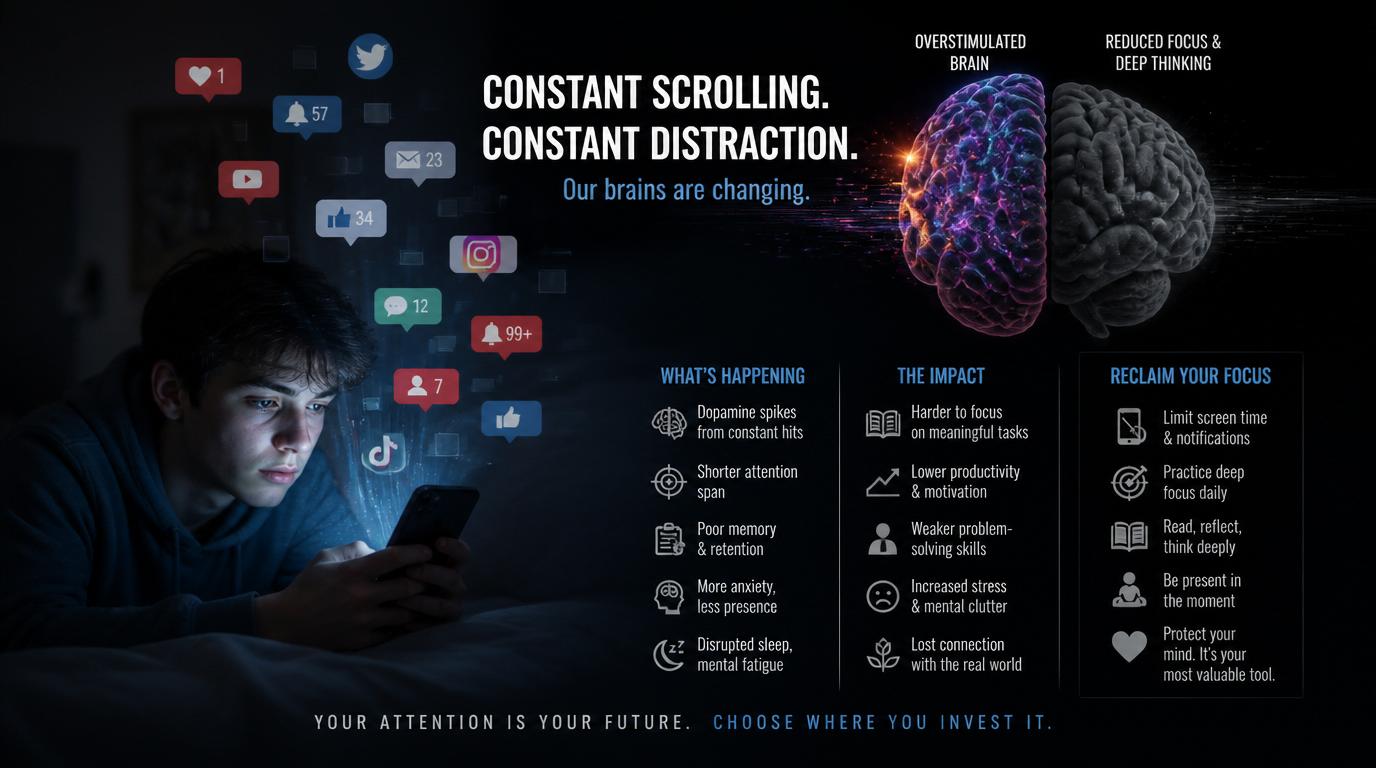
    Constant digital distractions make deep focus increasingly difficult.

    The Productivity Trap

    Scrolling often creates the illusion of activity.

    You feel busy.

    You feel informed.

    But very little meaningful progress is happening.

    Consider the difference:

    Scrolling for one hour:

    Consumes information

    Focused work for one hour:

    Creates value

    Scrolling rarely moves you closer to your goals.

    Focused action does.

    The problem isn’t taking breaks.

    Everyone needs rest.

    The problem is when scrolling becomes the default response to boredom, stress, uncertainty, or discomfort.

    Instead of solving problems, we distract ourselves from them.

    Instead of taking action, we consume more content

    Over time, productivity suffers.

    Endless Scrolling and Mental Well-Being

    Social media doesn’t only affect productivity.

    It can also influence mental health.

    Many platforms expose users to:

    •Highlight reels of other people’s lives

    •Unrealistic success stories

    •Constant comparisons

    •Negative news

    •Information overload

    When consumed excessively, this can create:

    •Stress

    •Anxiety

    •Self-doubt

    •Mental fatigue

    You may not consciously notice these effects.

    But your mind is processing everything you consume.

    Just as unhealthy food affects your body, unhealthy content can affect your mental environment.

    Being selective about what you consume matters.

    https://sandeepblogging.com/hidden-stress-behind-notifications/

    The Opportunity Cost of Scrolling

    Every choice has an opportunity cost.

    When you spend an hour scrolling, you’re also choosing not to spend that hour doing something else.https://www.apa.org/

    For example:

    One hour could be used to:

    Read 20 pages of a book

    •Learn a new skill

    •Exercise

    •Write content

    •Build a business

    •Spend time with family

    •Improve your health

    The biggest cost isn’t what scrolling gives you.

    It’s what it prevents you from doing.

    Years later, people rarely regret reading books, learning skills, or investing in themselves.

    But many regret wasting countless hours on activities they barely remember.

    Small daily habits can accumulate into hundreds of lost hours every year.

    What Endless Scrolling Takes From Your Future

    The impact of scrolling compounds over time.

    Just as positive habits create positive outcomes, negative habits create negative outcomes.

    A few minutes may not matter.

    A few hours every day certainly do.

    Imagine two people:

    https://hbr.org/?

    Person A:

    •Reads daily

    •Learns new skills

    •Works on personal goals

    Person B:

    Spends the same time scrolling

    After a week, the difference is small.

    After a year, the difference becomes significant.

    After five years, the gap can be enormous.

    The future you want is built by how you spend your time today.

    How to Break the Endless Scrolling Habit

    The goal isn’t to quit social media completely.

    The goal is intentional use.

    1. Track Your Screen Time

    Most smartphones provide screen-time reports.

    Awareness is the first step.

    2. Remove Unnecessary Notifications

    Notifications encourage impulsive checking.

    Turn off everything that isn’t essential.

    3. Create Phone-Free Periods

    Try:

    •First hour after waking up

    •During meals

    •Before bedtime

    4. Replace the Habit

    Don’t just remove scrolling.

    Replace it with:

    Reading

    Walking

    Journaling

    Learning

    5•Set Daily Limits

    Even a simple limit can dramatically reduce mindless use.

    6. Use Social Media Intentionally

    Open apps with a purpose.

    Avoid opening them out of boredom.

    7. Practice Deep Work

    Spend dedicated time focusing on a single task without interruptions.

    This helps rebuild attention span.

    https://sandeepblogging.com/why-procrastination-feels-good-in-the-moment/

    Replacing scrolling with intentional activities improves focus and personal growth.

    Final Thoughts

    Endless scrolling isn’t just stealing minutes.

    It’s quietly taking your focus, productivity, attention, and opportunities.

    The danger lies in how normal it has become.

    Most people don’t notice the cost because the loss happens gradually.

    But every hour spent scrolling is an hour that could have been invested in something meaningful.

    You don’t need to abandon social media.

    You simply need to use it intentionally rather than automatically.

    Your attention is one of your most valuable resources.

    Protect it.

    The quality of your future depends on where your attention goes today.

  • Why Procrastination Feels Good in the Moment (And How to Beat It)

    Why Procrastination Feels Good in the Moment (And How to Beat It)

    Procrastination often feels rewarding because it provides temporary relief from difficult or uncomfortable tasks.

    Introduction

    Have you ever opened your laptop to work on an important task, only to find yourself scrolling social media, watching videos, or organizing things that suddenly seem urgent?

    Most people think procrastination is a time management problem.

    It isn’t.

    Constant digital stimulation can significantly affect your attention span and make important work feel harder to start.

    https://sandeepblogging.com/why-short-videos-are-destroying-your-attention-span/

    Procrastination is often an emotion management problem.

    The reason procrastination is so common is that it actually feels good in the moment. When we delay a difficult task, our brain experiences temporary relief. That relief becomes rewarding, making procrastination a habit that repeats itself.

    In this article, we’ll explore why procrastination feels so satisfying, how it affects productivity, and what you can do to break the cycle.

    What Is Procrastination?

    Procrastination is the act of delaying or avoiding tasks that you know are important.

    Examples include:

    Putting off studying for an exam

    Delaying a work project

    Avoiding difficult conversations

    Postponing exercise

    Waiting until the last minute to complete assignments

    The key difference between procrastination and rest is intention.

    Rest is a planned recovery activity.

    Procrastination is avoiding something you know you should be doing.

    Why Procrastination Feels Good

    Avoiding difficult tasks can create temporary emotional relief, which reinforces procrastination habits.

    Many people assume procrastination happens because they are lazy.

    Research suggests something different.

    When we face a difficult task, we may experience:

    Stress

    Anxiety

    Fear of failure

    Uncertainty

    Mental discomfort

    Our brain naturally wants to reduce discomfort.

    When we switch from a difficult task to something easier, we experience immediate relief.

    That relief feels rewarding.

    The problem is that the reward is temporary.

    The Instant Gratification Trap

    Social media and short-form content provide immediate rewards that compete with long-term goals.

    Frequent phone checking habits make instant gratification even more difficult to resist.

    https://sandeepblogging.com/why-we-check-our-phones-hundreds-of-times-a-day/

    Modern technology makes procrastination easier than ever.

    Social media, short videos, games, and endless notifications provide instant rewards.

    Compare these two options:

    Option A: Spend two hours working on a challenging project.

    Option B: Watch entertaining videos for two hours.

    The second option delivers immediate pleasure.

    The first option requires effort before rewards appear.

    Our brains often choose immediate rewards over delayed rewards.

    This is known as instant gratification.

    Why Your Brain Chooses Short-Term Rewards

    psychology research

    https://www.apa.org/

    Human brains evolved to prioritize immediate benefits.

    Thousands of years ago, immediate rewards helped humans survive.

    Today, that same tendency can work against us.

    Social media platforms, mobile apps, and entertainment content are designed to provide frequent rewards.

    Every like, comment, notification, or new video can trigger curiosity and engagement.

    As a result, important tasks often lose the competition for attention.

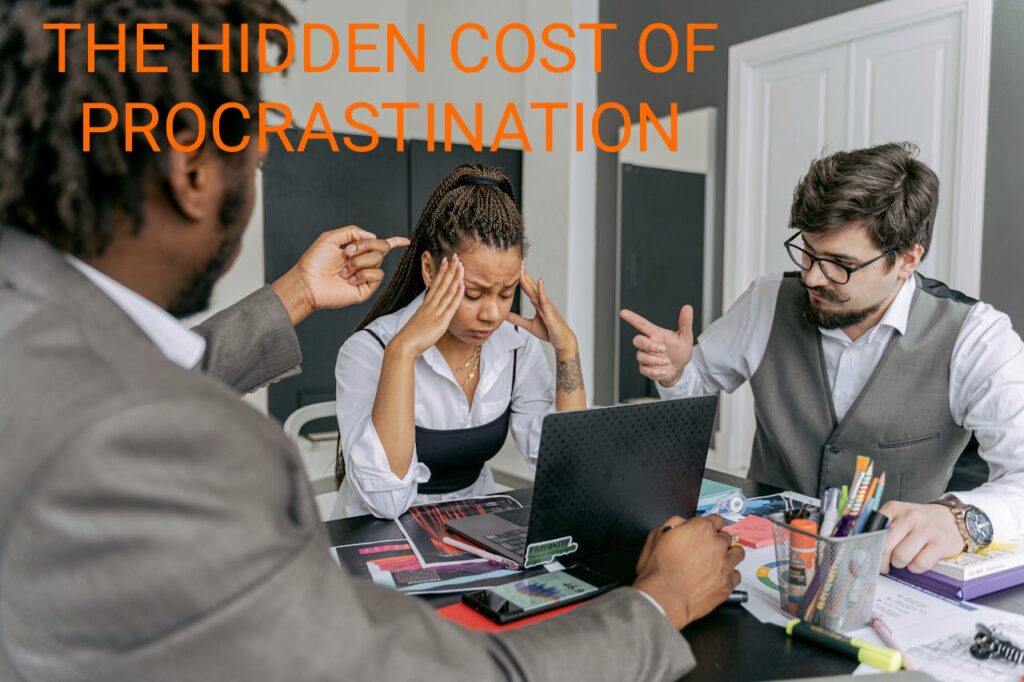
    The Hidden Cost of Procrastination

    Delaying important tasks often increases stress, mental fatigue, and pressure over time.

    Constant notifications and distractions can make procrastination even worse.

    https://sandeepblogging.com/hidden-stress-behind-notifications/

    Although procrastination feels good initially, the long-term consequences can be significant.

    Common effects include:

    Increased Stress

    The task doesn’t disappear.

    It remains in the background, creating ongoing mental pressure.

    Reduced Productivity

    Delaying important work leaves less time to complete it properly.

    Lower Confidence

    Repeated procrastination can make people doubt their abilities.

    Poor Quality Results

    Last-minute work is often rushed and less effective.

    Mental Fatigue

    Constantly thinking about unfinished tasks consumes mental energy.

    How To Beat Procrastination

    Small focused actions are often more effective than waiting for motivation to appear.

    Many people combine procrastination with multitasking, which further reduces productivity.

    https://sandeepblogging.com/why-multitasking-doesnt-work/

    1. Use the Five-Minute Rule

    Tell yourself:

    “I only need to work on this for five minutes.”

    Starting is usually the hardest part.

    Once you begin, continuing becomes easier.

    2. Break Large Tasks Into Small Steps

    Big tasks feel overwhelming.

    Instead of:

    “Write a blog post.”

    Try:

    Choose topic

    Create outline

    Write introduction

    Write first section

    Small steps reduce mental resistance.

    3. Remove Distractions

    Create an environment that supports focus.

    Examples:

    Silence notifications

    Put your phone away

    Close unnecessary tabs

    Use website blockers if needed

    4. Focus on Progress, Not Perfection

    Perfectionism often causes procrastination.

    Many people delay work because they want everything to be perfect.

    Progress matters more than perfection.

    5. Schedule Deep Work Sessions

    Set aside dedicated time for focused work.

    Even 30 minutes of uninterrupted focus can produce meaningful results.

    Building Better Habits

    productivity research

    https://hbr.org/

    Overcoming procrastination isn’t about becoming perfect.

    Everyone procrastinates sometimes.

    The goal is to reduce how often it happens.

    Small daily improvements create long-term results.

    A person who starts tasks consistently will usually outperform someone who waits for perfect motivation.

    Final Thoughts

    Procrastination feels good because it provides immediate relief from discomfort.

    The problem is that temporary relief often creates bigger problems later.

    The next time you feel the urge to delay an important task, remember this:

    You don’t need to finish the entire task.

    You only need to start.

    One small action can break the cycle of procrastination and build momentum toward meaningful progress.

    The more often you choose action over avoidance, the easier focus and productivity become.

  • Why Our Brain Can’t Focus Anymore in the Age of Social Media

    Why Our Brain Can’t Focus Anymore in the Age of Social Media

    Constant scrolling and endless notifications are slowly changing the way our brains focus and process information.

    introduction

    Have you noticed how difficult it has become to focus for even a few minutes?

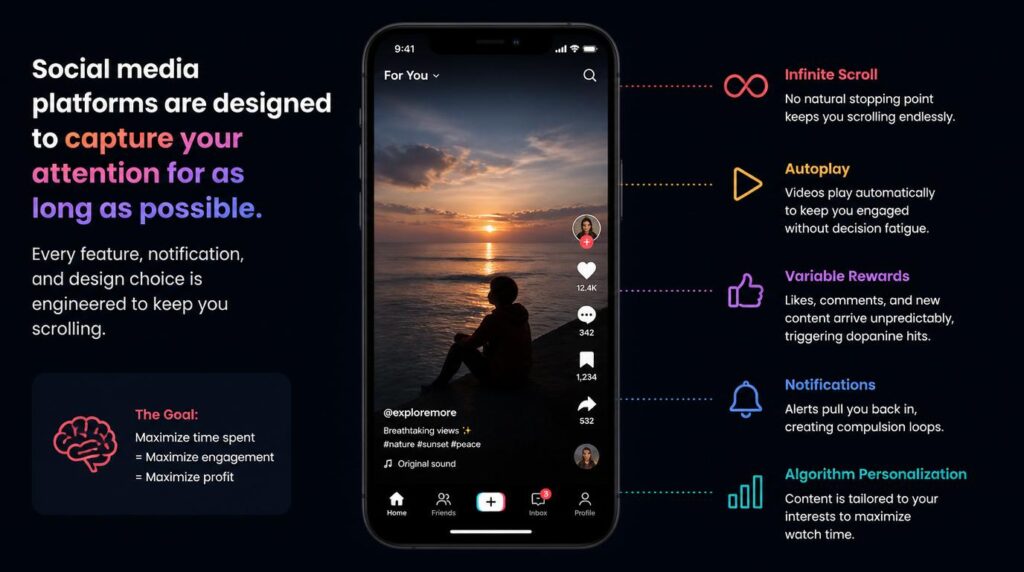
    Modern social media platforms are designed to capture attention for as long as possible.

    Many people sit down to study, work, or read something important, only to find themselves checking notifications moments later. A quick glance at Instagram suddenly turns into 30 minutes of scrolling. One YouTube Short becomes twenty. Even when there’s nothing important to see, our brains keep craving more stimulation.

    This is not happening accidentally.

    Modern social media platforms are designed to capture and hold attention for as long as possible. Every notification, swipe, video, and recommendation trains the brain to constantly seek stimulation. Over time, this changes the way we focus, think, and process information.

    Today, attention has become one of the most valuable resources in the digital world.

    The Attention Economy

    Most social media platforms make money by keeping users online longer. The more time people spend scrolling, the more advertisements they see.

    This means many apps are carefully designed to trigger curiosity and emotional reactions.

    Features like:

    Infinite scrolling

    Push notifications

    Short-form videos

    Auto-play content

    Personalized algorithms

    all work together to keep users engaged continuously.

    Every swipe gives the brain a small dopamine reward. Dopamine is a chemical linked to motivation and pleasure. When people receive likes, comments, messages, or new videos, the brain experiences small bursts of the stimulation

    Over the period of time, the brain begins craving constant novelty.

    That is why silence now feels uncomfortable for many people.

    Why Focus Feels Harder Today

    Deep focus requires calmness, patience, and uninterrupted attention. But modern digital habits train the brain in the opposite direction.

    Instead of concentrating on one task for a long period, people now switch rapidly between apps, videos, chats, and notifications.

    https://www.who.int/health-topics

    This constant task switching exhausts the brain.

    As a result:

    Attention spans become shorter

    Reading long content feels difficult

    Productivity decreases

    Mental fatigue increases

    Boredom becomes harder to tolerate

    Many students and creators feel frustrated because they can no longer focus like they used to. They blame themselves for being lazy or unmotivated.

    But often the real issue is digital overstimulation.

    The Rise of Brain Fog

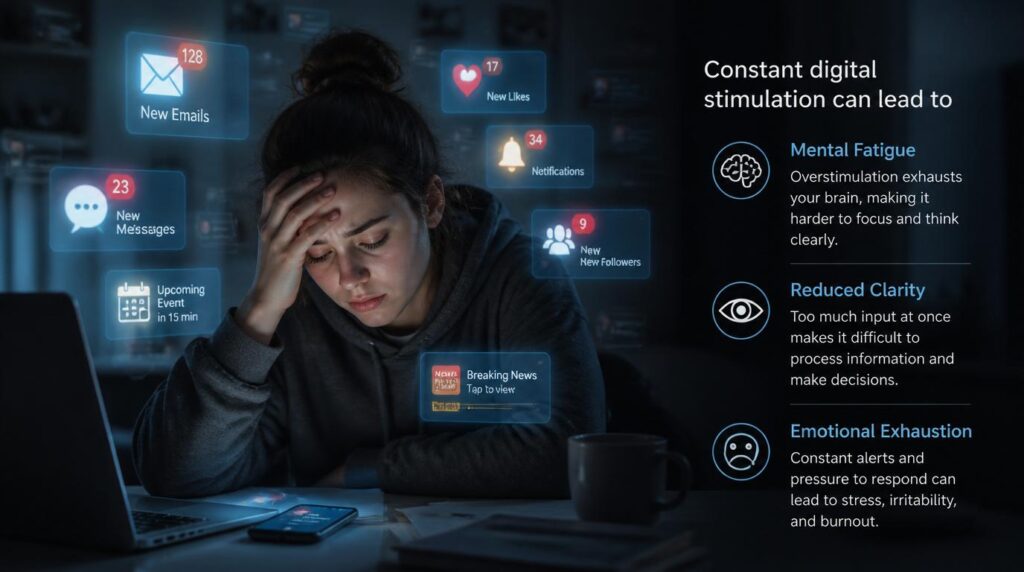
    Constant digital stimulation can lead to mental fatigue, reduced clarity, and emotional exhaustion.

    One major side effect of constant digital stimulation is brain fog.

    Brain fog refers to feelings of mental exhaustion, lack of clarity, forgetfulness, and reduced concentration.

    People experiencing brain fog often feel:

    Tired even after resting

    Unable to think clearly

    Mentally overwhelmed

    Emotionally drained

    Easily distracted

    Social media overload contributes heavily to this problem.

    When the brain never truly rests, mental clarity slowly declines.

    Many people wake up and immediately check their phones. Throughout the day, they consume endless information without giving their minds time to process anything deeply.

    This constant stimulation leaves the brain overloaded.

    Why Short Videos Are Rewiring Attention

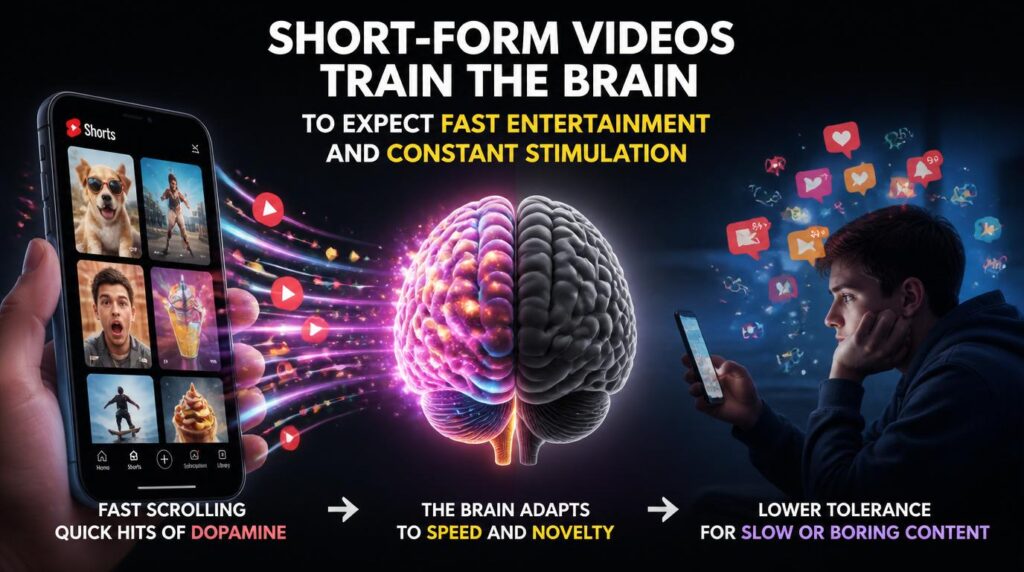
    Short-form videos train the brain to expect fast entertainment and constant stimulation.

    Short-form content platforms like Instagram Reels,Facebook reels , TikTok, and YouTube Shorts are especially powerful because they deliver fast entertainment continuously.

    https://www.psychologytoday.com

    Every few seconds:

    New music

    New emotions

    New visuals

    New stories

    New dopamine triggers

    The brain becomes accustomed to rapid stimulation.

    As a result, slower activities such as studying, reading books, or working on long projects begin to feel boring.

    This doesn’t mean short videos are evil. The problem appears when constant consumption replaces intentional focus.

    Over time, the brain starts expecting instant rewards everywhere.

    The Emotional Cost of Constant Scrolling

    The effects of social media are not limited to focus problems.only

    Many people also experience:

    Anxiety

    Comparison

    Burnout

    Loneliness

    Sleep problems

    Emotional exhaustion

    Social media creates pressure to stay updated constantly. Everyday Notifications make people feel like they must always respond immediately.

    Creators face even more pressure:

    Posting consistently

    Tracking views

    Checking engagement

    Competing for attention

    Behind many successful-looking accounts are exhausted people struggling mentally.

    Why Notifications Are So Addictive

    The Hidden Stress Behind Every Notification

    https://sandeepblogging.com/hidden-stress-behind-notifications/

    Notifications are designed to interrupt attention.

    Every vibration or sound creates curiosity: “Who messaged me?” “Did my post get likes?” “Did someone reply?”

    Even when notifications are unimportant, the brain still reacts automatically.

    This repeated interruption damages deep concentration.

    Many people cannot complete even simple tasks without checking their phones repeatedly.

    The brain slowly loses its ability to stay consistent at present.

    The Importance of Protecting Attention

    https://www.digitalwellnessinstitute.com

    Attention shapes life.

    What people focus on daily eventually shapes:

    Habits

    Thoughts

    Productivity

    Emotions

    Relationships

    Future goals

    That’s why protecting attention has become more important than ever.

    People who control their attention are more likely to:

    Think clearly

    Learn deeply

    Build meaningful skills

    Feel emotionally balanced

    Avoid burnout

    In a world filled with endless distractions, focus has become a superpower.

    How To Improve Focus Naturally

    The good news is that attention can improve again with healthy habits.

    1. Reduce Unnecessary Notifications

    Turn off non-essential notifications. Most alerts are not urgent.

    2. Avoid Doom Scrolling

    Set time limits for social media use.daily

    3. Create Phone-Free Time

    Spend at least 60-90 minutes daily without screens.

    4. Read Long-Form Content

    Books and long articles help rebuild concentration again

    5. Sleep Properly

    Mental recovery is impossible without quality of sleep.

    6. Spend Time Offline

    Walking, exercise,running , meditation, and real conversations help calm the brain.

    7. Practice Deep Work

    Focus on one task at a time without switching constantly.

    Sometimes disconnecting from screens is necessary to reconnect with mental clarity and emotional peace.

    Final Thoughts

    Modern technology is very powerful, but constant digital stimulation comes with hidden costs

    Many people are not losing intelligence or motivation. Their brains are simply overloaded.

    Social media platforms are competing aggressively for human attention, and most people don’t realize how much it affects on mental health and focus.

    Protecting your attention is no longer optional.

    It is necessary for mental clarity, emotional peace, and long-term growth.

    Sometimes the most productive thing you can do is disconnect for a while from social media and allow your mind to breathe again.

    If you feel like your attention span is getting weaker, you’re not alone.

    Modern apps are designed to compete for your focus every second of the day.

    Take breaks. Protect your attention. And remember — your mind deserves silence too.

    If this article helped you, share it with someone struggling with digital burnout and constant scrolling.

    https://www.sandeepblogging.com

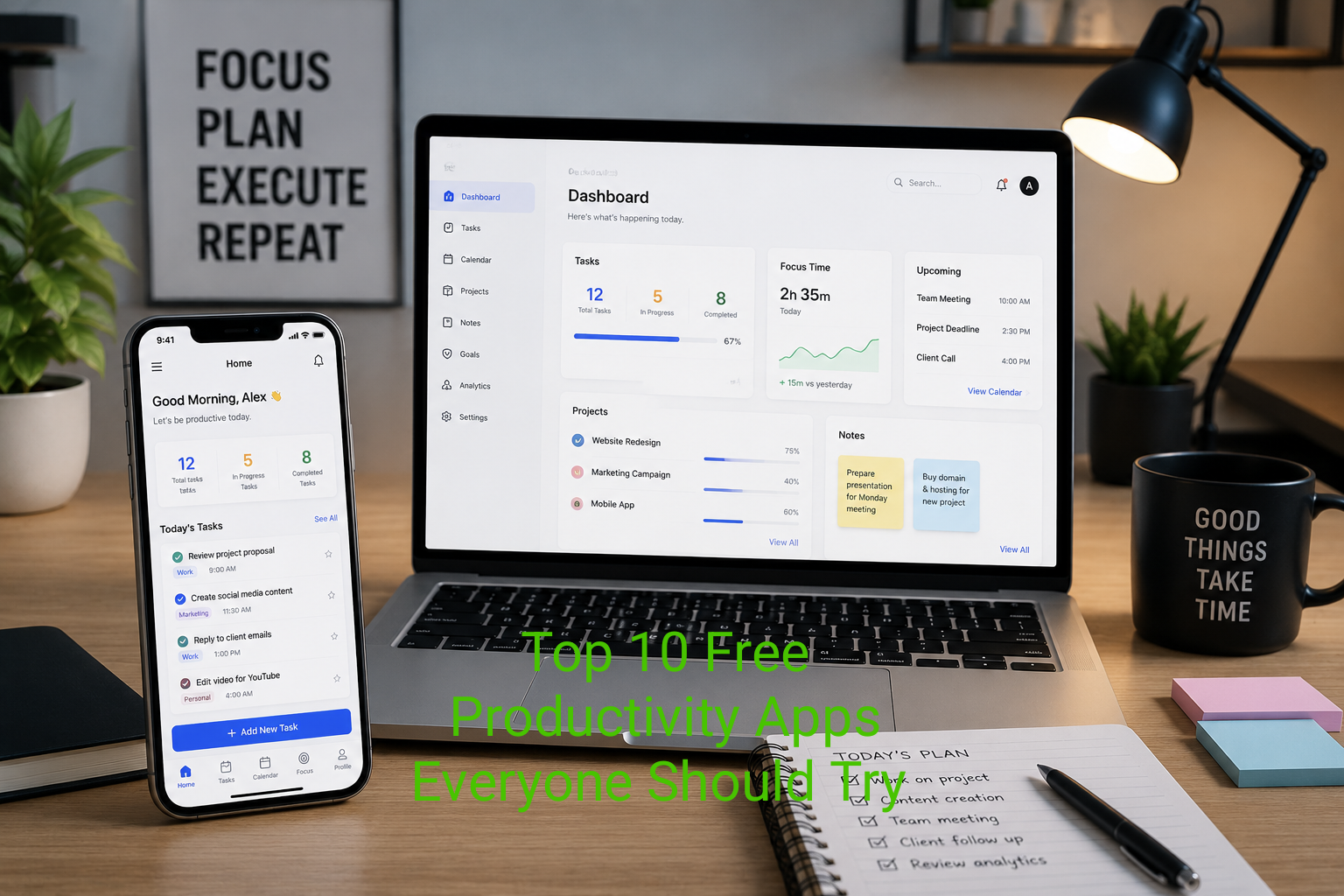
  • Top 10 Free Productivity Apps Everyone Should Try in 2026 🚀

    Top 10 Free Productivity Apps Everyone Should Try in 2026 🚀

    Introduction:

    In today’s fast-moving digital world, staying organized and productive has become more important than ever. Whether someone is managing work tasks, planning content, organizing schedules, or simply trying to stay focused, productivity apps are helping millions of people simplify their daily routines.

    The good news is that many powerful productivity apps are available for free and work across smartphones, tablets, and computers.

    From task management and note-taking to focus improvement and cloud organization, the right apps can save time and reduce stress during busy days.

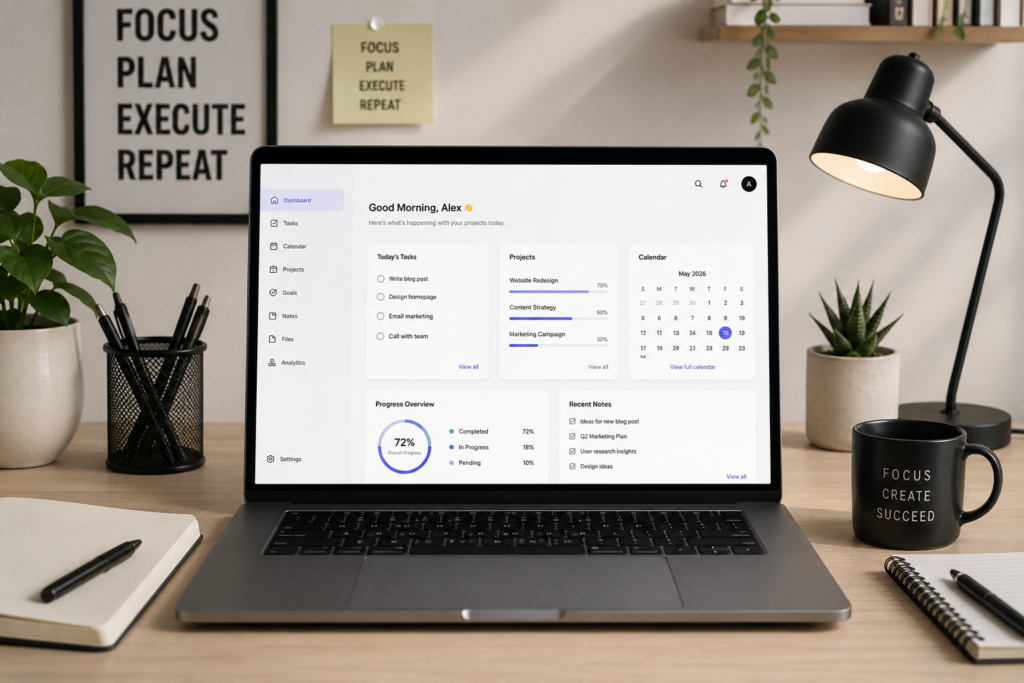
    1. Notion – All-in-One Productivity Workspace

    Notion has become one of the most popular productivity platforms because it combines notes, task management, planning, databases, and collaboration tools into one workspace.

    People use Notion to:

    organize projects,

    create schedules,

    track goals,

    manage content,

    save ideas,

    collaborate with teams.

    Its flexibility allows users to customize pages according to their workflow style.

    Whether someone is planning daily tasks or managing long-term projects, Notion helps keep everything organized in one place.

    https://www.Notion.com

    Notion helps users organize projects, schedules, and workflows efficiently.

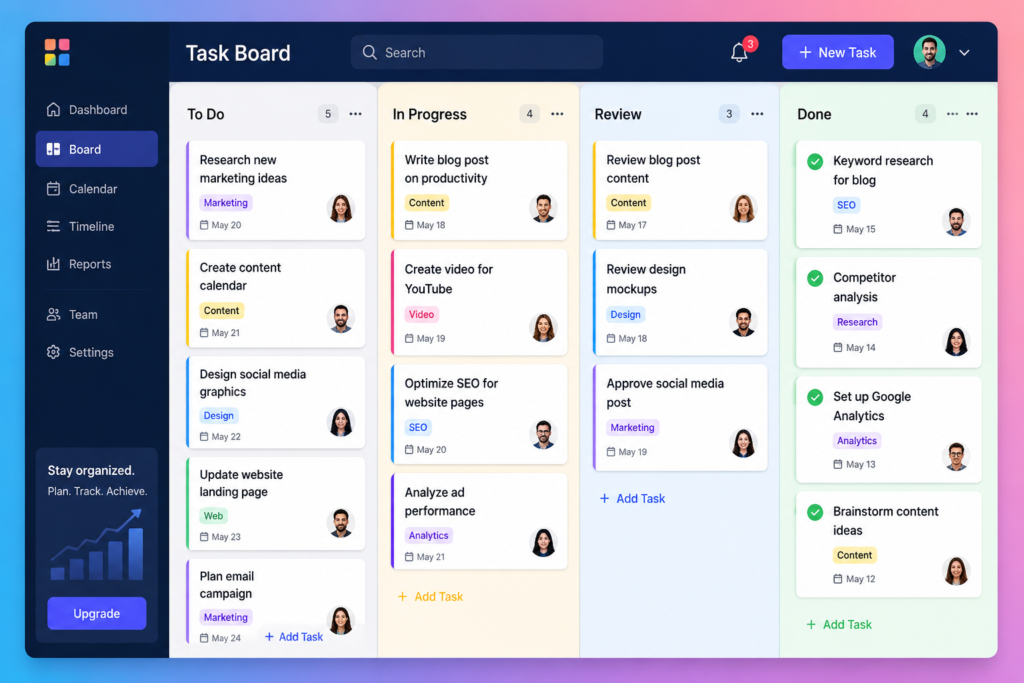
    2. Trello – Visual Task Management

    Trello is a visual productivity app designed for task organization and project tracking.

    It uses boards, lists, and cards to help users manage work in a simple and visual way.

    Trello is commonly used for:

    project planning,

    content calendars,

    workflow management,

    team collaboration,

    daily task tracking.

    Its drag-and-drop system makes organization simple even for beginners

    Trello makes task management simple with visual organization boards.

    3. Todoist – Smart Daily Task Planner

    Todoist is a lightweight productivity app that helps users stay organized through task lists and reminders.

    Users can:

    create tasks,

    set deadlines,

    organize priorities,

    track progress,

    manage routines.

    Its clean interface helps users focus without feeling overwhelmed.

    Many professionals and creators use Todoist to manage both personal and professional responsibilities efficiently.

    https://www.Todoist.Com

    Todoist helps organize daily goals, priorities, and reminders effectively.

    4. Google Keep – Quick Notes & Ideas

    Google Keep is a simple yet useful app for capturing notes, reminders, ideas, and quick lists.

    The app supports:

    voice notes,

    checklists,

    color labels,

    image notes,

    reminders.

    Because it syncs across devices, users can quickly access their notes anytime.

    Its lightweight design makes it ideal for quick productivity tasks and idea collection.

    https://keep.google.com/

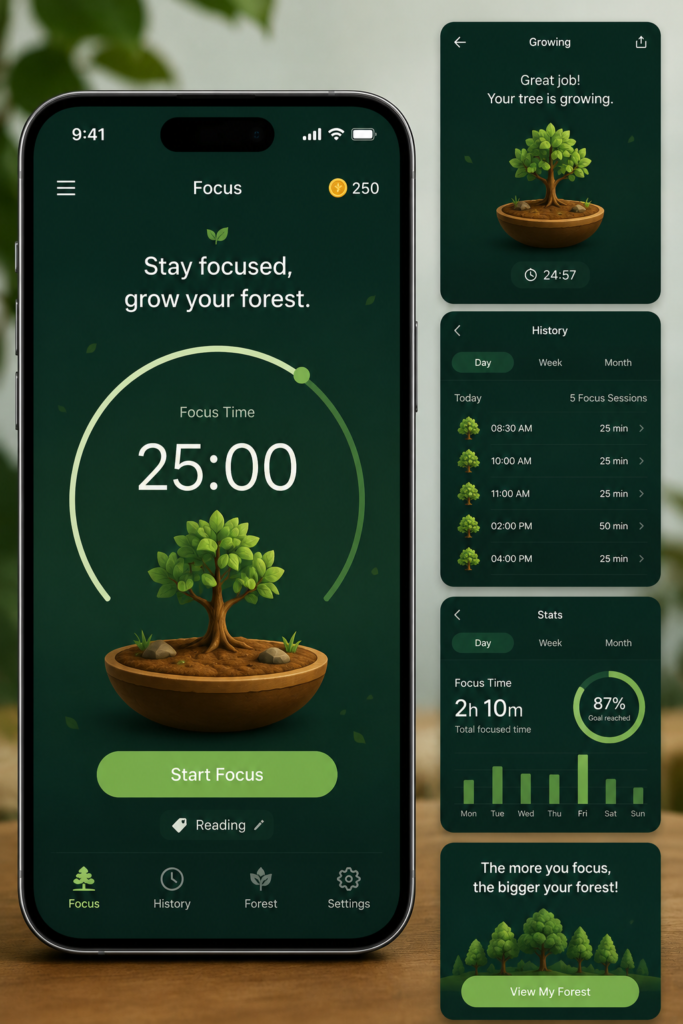
    5. Forest – Stay Focused & Reduce Distractions

    Forest is a unique productivity app designed to help users stay focused and avoid distractions.

    The app uses a creative concept where users grow virtual trees while staying away from distractions like social media.

    If users leave the app before the timer ends, the tree stops growing.

    Forest helps improve:

    focus,

    study sessions,

    work concentration,

    digital discipline.

    Its gamified approach makes productivity more engaging and motivating.

    Forest encourages focus and productivity through distraction-free sessions.

    6. Evernote – Advanced Note Organization

    Evernote remains a powerful app for note-taking and information organization.

    Users can store:

    notes,

    documents,

    images,

    ideas,

    research,

    project information.

    Its search and tagging system makes finding information easy ways , even within large collections of notes.

    Evernote works well for professionals, writers, and researchers managing large amounts of information.

    https://evernote.com

    7. Slack – Communication & Collaboration

    Slack is widely used for communication and collaboration between teams.

    It helps reduce clutter from long email chains by organizing conversations into channels.

    Slack supports:

    file sharing,

    messaging,

    integrations,

    workflow collaboration,

    notifications.

    Remote teams and businesses use Slack to improve communication efficiency.

    8. Microsoft OneNote – Digital Notebook

    OneNote acts like a digital notebook where users can organize notes into sections and pages.

    It supports:

    handwriting,

    audio notes

    checklists,

    synced organization.

    Many users prefer OneNote for detailed planning, note-taking, and long-term organization.

    https://onenote.cloud.microsoft

    9. Clockify – Free Time Tracking Tool

    Clockify helps users track how much time they spend on tasks and projects.

    This can improve:

    productivity awareness,

    workflow management,

    scheduling,

    time optimization.

    Freelancers, businesses, and creators often use time tracking tools to improve efficiency and planning.

    10. Canva – Quick Visual Content Creation

    Canva continues to be one of the easiest platforms for creating visual content quickly.

    Users can design:

    presentations,

    social media graphics,

    posters,

    thumbnails,

    resumes,

    documents.

    Its beginner-friendly templates help users save time while creating professional visuals.

    https://www.canva.in

    How Productivity Apps Improve Daily Workflow

    Productivity apps help users:

    stay organized,

    reduce distractions,

    manage time better,

    simplify communication,

    improve planning,

    streamline workflows.

    Instead of relying on memory alone, digital productivity tools help structure tasks and information more effectively.

    Tips for Better Productivity

    Using apps alone is not enough. Consistency and healthy habits are equally important.

    Here are a few simple productivity tips:

    prioritize important tasks,

    avoid multitasking,

    schedule focused work sessions,

    take short breaks,

    organize digital files regularly,

    limit unnecessary notifications.

    Small improvements in daily routines can create significant long-term results.

    Final Thoughts

    All these Productivity apps are helping people manage their daily work more efficiently than ever before. Whether organizing projects, tracking tasks, taking notes, or improving focus, the right tools can simplify modern workflows and reduce stress.

    The best part is that many excellent productivity apps are available for free, making them accessible to beginners, professionals, creators, and businesses alike.

    As technology continues evolving in 2026, learning how to use productivity tools effectively can help improve organization, focus, and overall efficiency.

    Which productivity app would you like to try first? Share your favorite tools and productivity tips in the comments below.

    for More such Information Read My All previous Blog:

    https://www.sandeepblogging.com

  • 10 AI Tools That Can Make Students Money in 2026

    10 AI Tools That Can Make Students Money in 2026

    Best AI tools helping students earn money online in 2026.

    Best Free AI Tools for Online Income Without Investment

    Meta Description:

    Discover the top 10 AI tools that can help students earn money online in 2026. Learn freelancing, blogging, video editing, content creation, and digital side hustles using free AI tools.

    Introduction

    Artificial Intelligence is changing the future of online earning. In 2026, students no longer need expensive degrees, heavy investments, or years of experience to start making money online.

    With the right AI tools, anyone can create content, design graphics, edit videos, write blogs, manage social media, and even start freelancing directly from home.

    Many students are already earning through:

    Blogging

    Freelancing

    YouTube automation

    Affiliate marketing

    Social media management

    Graphic design

    The best part? Most AI tools offer free plans for beginners.

    In this blog, you’ll discover the top 10 AI tools that can help students earn money online in 2026 and how to use them for side hustles and passive income.

    1. OpenAI’s ChatGPT

    Best For:

    Blog writing

    SEO content

    Freelancing

    Script writing

    Social media captions

    ChatGPT is one of the most powerful AI tools available today. Students can generate high-quality content within minutes and use it for blogging, freelancing, or digital marketing.

    Ways to Earn Money:

    Freelance writing

    SEO blog creation

    YouTube scripts

    Affiliate marketing articles

    Resume writing

    Official Website

    https://www.ChatGPT.Com

    ChatGPT helps students create blogs, scripts, and online content.

    2. Canva

    Best For:

    Instagram posts

    YouTube thumbnails

    Pinterest pins

    Posters and resumes

    Canva makes graphic design extremely simple for beginners. Students can create professional-looking graphics without learning complicated software.

    Income Ideas:

    Thumbnail designing

    Instagram post creation

    Social media management

    Digital products

    Official Website:

    https://www.canva.in

    Canva makes graphic designing easy for beginners.

    3. Google’s Google Gemini

    Best For:

    Research

    Productivity

    Study help

    Content ideas

    Google Gemini helps students research trending topics, generate business ideas, and improve productivity.

    How Students or Beginner’s Can Use It:

    Trend research

    Viral topic ideas

    Presentation creation

    AI learning

    Official Website:

    https://gemini.google.com

    4. Adobe’s Adobe Express

    Best For:

    Reel editing

    Social media content

    Short videos

    Short-form content is dominating platforms like:

    Instagram

    Facebook

    Youtube

    Adobe Express helps beginners create eye-catching videos quickly.

    Income Opportunities:

    Reels editing

    Video content creation

    Client projects

    Official Website:

    https://www.adobe.com/express

    5. Grammarly’s Grammarly

    Best For:

    Grammar correction

    Professional writing

    Editing blogs

    Grammarly helps students improve their writing quality and professionalism.

    Services You Can Offer:

    Proofreading

    Blog editing

    Resume optimization

    LinkedIn content writing

    Official Website:

    https://www.grammarly.com

    6. CapCut’s CapCut

    Best For:

    Viral reels

    YouTube Shorts

    TikTok-style videos

    Cap Cut is one of the most popular editing apps for creators and beginners.

    Side Hustle Ideas:

    Editing reels for clients

    Creating motivational videos

    Growing theme pages

    Official Website:

    https://www.CapCut.com

    7. Notion Labs’s Notion

    Best For:

    Study planners

    Productivity templates

    Digital products

    Students are earning money by selling Notion templates online.

    Platforms to Sell Templates:

    •Gumroad

    •Etsy

    Official Website:

    https://www.notion.com

    8. Jasper AI’s Jasper

    Best For:

    Marketing content

    Ad copy

    Affiliate promotions

    Students interested in digital marketing can use Jasper for creating promotional content.

    Ways to Earn:

    Copywriting

    Ad writing

    Email marketing

    Official Website:

    https://www.jasper.ai

    9. Pictory’s Pictory

    Best For:

    Faceless YouTube channels

    Blog-to-video conversion

    AI-generated videos

    Pictoryautomatically converts text into videos.

    Money-Making Method:

    Start a faceless YouTube channel using AI-generated scripts and voiceovers.

    Official Website:

    https://pictory.ai

    10. Fiverr

    Best For:

    Freelancing

    Selling AI services

    After learning AI skills, students can start freelancing online.

    Services You Can Sell:

    Blog writing

    Thumbnail designing

    Video editing

    Social media content

    Official Website:

    https://www.Fiverr.com

    How Students Can Start Earning With AI

    Step 1: Learn One Skill

    Choose one area:

    Writing

    Designing

    Video editing

    Blogging

    Step 2: Practice Daily

    Spend at least one hour daily improving your skill.

    Step 3: Build Social Media Presence

    Post content regularly on:

    Pinterst

    Linkdin

    Instagram

    Facebook

    Step 4: Start Freelancing

    Offer beginner-friendly services online and build your portfolio.

    Common Mistakes to Avoid

    1. Expecting Fast Results

    Online success requires consistency.

    2. Copying Content

    Always create original and useful content.

    3. Ignoring SEO

    SEO helps blogs rank on search engines and generate free traffic.

    4. Learning Too Many Skills Together

    Focus on mastering one skill first.

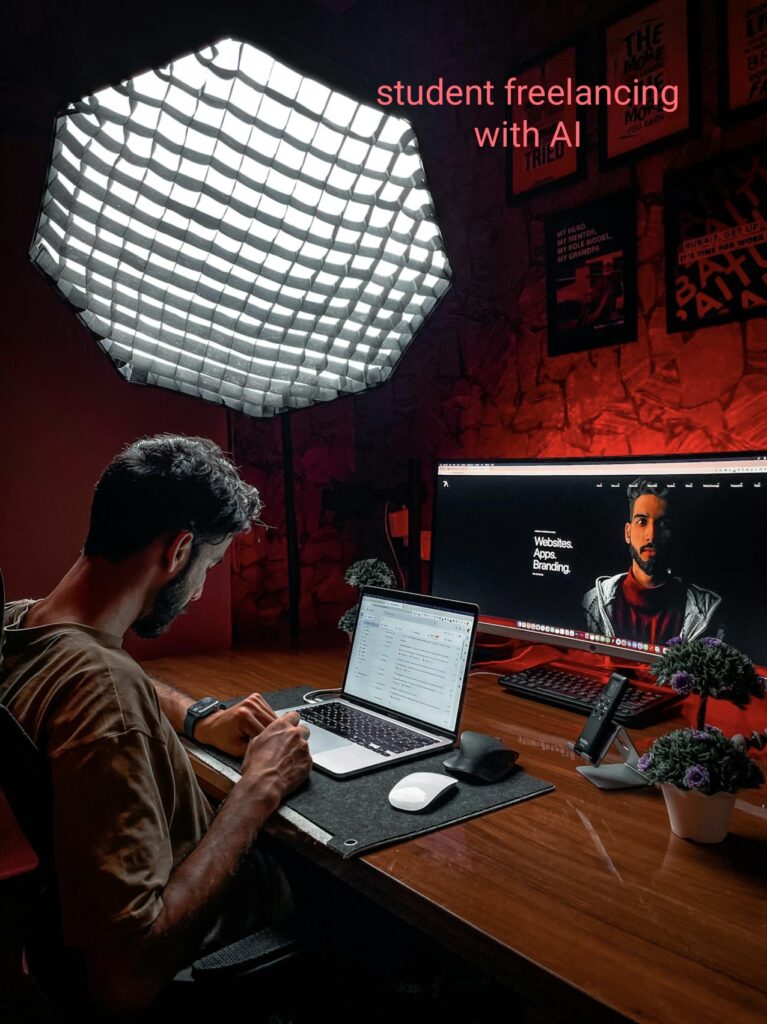
    AI freelancing is becoming a popular student side hustle.

    Final Thoughts

    AI is creating massive opportunities for students in 2026. Whether you want to start blogging, freelancing, video editing, or content creation, these tools can help you build an online income stream from home.

    The earlier you start learning AI skills, the bigger your advantage will be in the future digital economy.

    Start small, stay consistent, and keep learning every day.

    If you found this blog helpful, share it with your friends and classmates who want to start earning online using AI tools.Follow our blog for more:

    Online earning tips✅ AI tools and tutorials✅ Blogging guides✅ Freelancing strategies✅ Digital side hustle ideas start learning today because the future belongs to those who adapt to AI technology early.

    https://www.sandeepblogging.com

  • 🚨 Top 5 Online Scams You Must Avoid in India (2026 Guide)

    🚨 Top 5 Online Scams You Must Avoid in India (2026 Guide)

    Learn how to identify fake job offers, OTP fraud, and online earning scams.

    The internet has created endless opportunities to earn money online. From freelancing and affiliate marketing to blogging and online businesses, more people than ever are trying to build income from home.

    But there’s also a dangerous side of the internet that many beginners ignore.

    Every day, thousands of people lose money to get fake job offers, Telegram scams, OTP fraud, and fake investment schemes.

    Scammers target students, job seekers, and beginners, because they know people are looking for quick ways to earn money online.

    The good news?

    Most scams can be avoided if you know the warning signs.

    In this guide, you’ll learn about the top 5 online scams in India and how to protect yourself from losing money online.

    ❌ 1. Fake Job Offer Scams

    One of the most common online scams today is fake job offers.

    Scammers post attractive jobs on:

    •Telegram

    •WhatsApp

    •Facebook

    •Fake websites

    They promise:

    •Work from home jobs

    •Easy typing jobs

    •High salary for simple work

    But there’s a catch.

    They ask for:

    •Registration fee

    •Security deposit

    •Training payment

    After you pay, they disappear.

    Sometimes they even ask for personal documents and misuse them later.

    🚩 Warning Signs

    •Asking for paying money before giving work

    •Unrealistic salary promises

    •No proper company website

    •Poor grammar in messages

    •Pressure to pay quickly

    ✅ How to Stay Safe

    •Never pay to get a job

    •Research the company online

    •Check reviews on Google

    •Use trusted freelancing platforms

    Real companies pay employees — they don’t ask employees to pay first.

    Legitimate companies never ask candidates to pay money for jobs.

    📱 2. Telegram & WhatsApp Earning Scams

    You’ve probably seen messages like:

    👉 Earn ₹5000 daily from home

    👉 Simple task job

    👉 Instant payment guaranteed

    These scams are exploding in India.

    Usually, scammers first pay small amounts to gain trust. Then they ask users to invest larger amounts for “VIP tasks” or “premium earnings.”

    After people deposit money, the scammers block them.

    🚩 Warning Signs

    •Guaranteed daily income

    •Too-good-to-be-true offers

    •Unknown Telegram groups

    •Pressure to invest quickly

    •Fake screenshots of earnings

    ✅ How to Stay Safe

    •Avoid unknown Telegram channels

    •Never trust guaranteed income claims

    •Don’t send money to strangers

    •Verify businesses before investing

    Remember: If earning money online was truly that easy, everyone would already be rich.

    💳 3. OTP & Bank Fraud

    OTP fraud is one of the most dangerous scams because it directly targets your bank account

    Scammers pretend to be:

    •Bank employees

    •Customer care agents

    •Delivery executives

    They ask for:

    •OTP

    •CVV number

    •UPI PIN

    Once they get access, they steal money from your account instantly.

    🚩 Warning Signs

    •Calls asking for OTP

    •Messages requesting bank details

    •Fake customer care numbers

    •Threatening messages about account closure

    ✅ How to Stay Safe

    •Never share OTP with anyone

    •Banks never ask for OTP or PIN

    •Use official banking apps only

    •Enable transaction alerts

    Your OTP is private. Sharing it can empty your bank account within minutes.

    Never share your OTP, CVV, or UPI PIN with anyone.

    💰 4. Investment & Double Money Scams

    This scam targets people who want fast profits.

    Scammers promise:

    •Double money quickly

    •Guaranteed returns

    •Crypto profit schemes

    •High daily income

    Many fake apps and Telegram groups use screenshots and fake testimonials to appear trustworthy.

    But eventually:

    •withdrawals stop

    •websites disappear

    •admins vanish

    Thousands of people have lost savings because of greed and lack of research.

    🚩 Warning Signs

    •Guaranteed profits

    •No business transparency

    •Referral-based pressure

    •Fake celebrity endorsements

    •“Limited time” urgency

    ✅ How to Stay Safe

    •Avoid “double money” schemes

    •Research before investing

    •Use trusted investment platforms

    •Never invest blindly

    returns sound unrealistic, it’s probably a scam.

    💻 5. Freelancing Payment Scams

    Freelancing is a genuine way to earn online, but scammers also target freelancers.

    Here’s how it usually works:

    A fake client gives work to a freelancer. After the work is completed, the client disappears without paying.

    Some scammers also send fake payment screenshot

    🚩 Warning Signs

    •No advance payment

    •Refusing secure platforms

    •Asking for free sample work

    •Poor communication

    ✅ How to Stay Safe

    •Use trusted like freelancing platforms

    •Ask for only advance payment

    •Keep written agreements

    •Avoid suspicious clients

    Freelancing is real, but smart precautions are necessary.

    Use trusted freelancing platforms to avoid payment fraud.

    ✅ Safe Ways to Earn Money Online

    After learning about scams, many people become afraid of online earning.

    But the truth is: Online income is real if done correctly.

    Here are some safe ways to earn online:

    •Freelancing

    https://www.fiverr.com

    •Blogging

    •Affiliate marketing

    •YouTube content creation

    •Social media management

    •Selling digital products

    These methods require

    •skills

    •consistency

    •patience

    Not shortcuts.

    🧠 Final Thoughts

    The internet is full of opportunities, but it’s also full of traps.

    Scammers take advantage of:

    •greed

    •desperation

    •lack of knowledge

    The best protection is awareness.

    Before trusting any online offer:

    •Research properly

    •Think logically

    •Avoid emotional decisions

    Remember: Real online income takes effort and time.

    Stay safe, learn valuable skills, and focus on genuine opportunities instead of shortcuts.

    🚀 Final Conclusion

    Avoiding scams is just as important as learning how to earn money online.

    By staying alert and informed, you can protect:

    your money

    your personal information

    your future

    Focus on building real skills instead of chasing quick money.

    That’s the safest and smartest path to long-term online success.

    👉 Want more real online earning tips and scam awareness guides?

    Visit:https://www.sandeepblogging.com

    Follow for safe and practical online earning content 🚀

  • 📝 Why Most People Fail to Earn Money Online (And How to Avoid It)

    📝 Why Most People Fail to Earn Money Online (And How to Avoid It)

    👉 earn money online mistakes

    🚨 STOP!

    Read This Before You Try to Earn Money Online

    👉 90% of Beginning people who try to earn money online FAIL.

    Not because online earning is fake…But because they follow the wrong strategy.

    You’ve probably seen:

    •Earn ₹10,000/month easily

    •No skills needed

    •Start earning today

    Sounds exciting, right?

    But here’s the reality 👇

    👉 Much beginners quit within 30 days

    👉 Many lose money in scams

    👉 Others get zero results

    💡 If you don’t fix these mistakes, you’ll be one of them.

    But don’t worry…

    In this blog, you’ll learn:

    •Why most of the people fail to earn online

    •The biggest mistakes beginners make

    •A simple step-by-step plan to start earning

    ❌ 1. Chasing Quick Money Instead of Building Skill Many beginners want fast money with no effort.

    They search

    •Earn money instantly

    •No work income

    👉 This leads to scams or useless methods.

    ✅ What You Should Do Instead

    Focus on learning one skill like:

    •Content writing

    •Canva design

    •Video editing

    •Social media management

    👉 Skills = real income

    ❌ 2. Trying Everything at Once

    Many people try:

    •Freelancing

    •Blogging

    •Affiliate marketing

    •YouTube

    👉 Result? Confusion + no results.

    ✅ Fix This

    👉 Choose ONE method for 30 days

    Example: Start freelancing on Fiverr

    https://www.fiverr.com

    👉 start earning online from home

    👉 Focus = faster growth

    ❌ 3. Lack of Consistency

    People start strong… then stop after few days.

    👉 Online income needs:

    •Time

    •practice

    •Consistency

    ✅ Fix This

    👉 Work 2–3hours daily for 30 days

    Consistency > Motivation

    ❌ 4. Fear of Starting

    Common thoughts:

    •I don’t have skills

    •What if I fail?

    👉 So they will never start.

    ✅ Fix This

    👉 Start small

    👉 Learn while doing

    Action creates confidence.

    ❌ 5. Falling into Scams

    Many beginners lose money because they trust:

    •Fake job offers

    •Telegram earning groups

    •“Double money” schemes

    ✅ Fix This

    👉 Rule: Never pay to earn money

    Use trusted platforms like Fiverr or Upwork

    https://www.upwork.com

    ❌ 6. No Clear Plan

    Random actions = no results.

    ✅ Fix This (30-Day Plan)

    📅 Week 1 → Learn skill

    📅 Week 2 → Create samples

    📅 Week 3 → Apply for work

    📅 Week 4 → Earn first income 💰

    ❌ 7. Comparing with Others

    Seeing others succeed makes you feel behind.

    ✅ Fix This

    👉 Focus on your journey

    👉 Start small and grow step-by-step

    ❌ 8. No Patience

    Many quit before results come.

    ✅ Fix This

    👉 Give yourself at least 30–60 days

    Success takes time.

    💰 Safe Ways to Earn Money Online

    Start with proven methods:

    •Freelancing

    •Affiliate marketing

    •Blogging

    •Social media management

    👉 Build skills, not shortcuts.

    online income growth

    🧠 Mindset Shift That Changes Everything

    •Stop thinking: ❌ How to earn fast?

    •Start thinking: ✅ How to build a skill that pays?

    👉 This is the turning point.

    🚀 Simple Action Plan (Start Today)

    1 •Choose one skill

    2•Learn basics

    3•Practice daily

    4•Create sample work

    5•Apply for clients

    👉 Repeat daily → results will come

    🔗 Final Thoughts

    Most people fail not because online earning is fake…

    👉 They fail because they:

    •Quit early

    •Chase shortcuts

    • Don’t stay consistent

    💡 If you avoid these mistakes, you can get succeed.

    💰 Start Your Earning Journey

    👉 Want to learn real ways to earn online?.visit:

    https://www.sandeepblogging.com

    earn money online success

    📢 Follow Me

    For daily tips on:

    •Online earning

    •Side hustles

    •Safe income

    👉 Follow for more 🚀

  • 💸 Top 10 Online Scams in India & How to Avoid Them (2026 Guide for Safe Online Earning)

    💸 Top 10 Online Scams in India & How to Avoid Them (2026 Guide for Safe Online Earning)

    online scams in India 2026

    🔥 Introduction

    The internet has opened many ways to earn money online. From freelancing,content writing to affiliate marketing, anyone can start earning from home.

    But along with real opportunities,

    online scams are also increasing rapidly in India.

    Many beginners lose money because they don’t know how to identify fake offers.

    In this guide, you’ll learn about the top 10 online scams in India and how to stay safe while building your online income.

    🚨 1. Fake Job Offer Scams5

    You may receive messages offering like high-paying jobs with no experience required.

    They usually ask for a “registration fee” or “security deposit.”

    ❌ Red Flags:

    •Asking money before job

    •No official website

    •Too good to be true salary

    ✅ How to Stay Safe:

    Never pay to get a job. Always verify the company details.

    📱 2. Telegram & WhatsApp Earning Scams

    Messages like “Earn ₹5000 daily” are very common,

    They ask you to invest small money first and promise big returns.

    ❌ Red Flags:

    •Guaranteed income

    •Urgent payment request

    ✅ Solution:Avoid unknown groups and never send money.

    💳 3. OTP & Bank Fraud

    Scammers pretend to be bank officials and ask for OTP or card details.

    ❌ Red Flags:

    •Asking OTP

    •Threatening calls

    ✅ Solution:

    Never share OTP, PIN, or bank details

    🛍 4. Fake Shopping Websites

    Fake sites offer huge discounts to attract buyers.

    ❌ Red Flags:

    •Very low prices

    •No reviews or contact info

    ✅ Solution:

    Shop only from trusted platforms.

    💻 5. Freelancing Payment Scams

    Some clients take work but don’t pay.

    ❌ Red Flags:

    •No contract

    •Asking free work

    ✅ Solution:Use trusted platforms like Fiverr or Upwork.

    🎥 6. YouTube Monetization Scams

    Fake agents promise quick monetization for money.

    ❌ Red Flags:

    •Instant approval claims

    ✅ Solution:

    Follow official monetization rules.

    📊 7. Investment Scams

    Apps promise to double your money quickly.

    ❌ Red Flags:

    •Guaranteed returns

    •No legal registration

    ✅ Solution: Avoid “get rich quick” schemes.

    🧾 8. Data Entry Job Scams

    Companies ask for fees for simple typing jobs.

    ❌ Red Flags:

    •Easy work + high income

    •Registration charges

    ✅ Solution: Genuine jobs never ask for money.

    🧠 9. Fake Online Courses

    Courses promise fast money but give no real value.

    ❌ Red Flags:

    •Unrealistic claims

    •No proof or reviews

    ✅ Solution: Research before buying any course.

    🎁 10. Lottery & Giveaway Scams

    Messages claims that you won a big prize.

    ❌ Red Flags:

    •Asking fee to claim prize

    ✅ Solution: Ignore such messages completely.

    💰 Safe Ways to Earn Money Online (IMPORTANT)

    Now that you know about scams, here are trusted ways to earn online safely:

    •Freelancing on Fiverr,upwork

    https://www.fiverr.com

    •Affiliate marketing with genuine products

    •Blogging and content writing

    •Social media management

    👉 Focus on real skills, not shortcuts

    🔐 Tips to Stay Safe Online

    •Never share OTP or personal info

    •Avoid unknown links

    •Always verify before trusting

    •Don’t fall for “easy money” tricks

    🚀 Final Thoughts

    Online earning is real, but scams are everywhere.

    If you stay alert and focus on genuine methods, you can build a safe and successful online income.

    🔗 Start Earning the Right Way

    👉 Want to learn real online earning

    👉Click here to read full guide:

    https://www.sandeepblogging.com

    📢 Follow Me

    For daily tips on online earning and safety, follow me on my all platforms 🚀

  • 5 Side Hustles Students Can Start With 乏0 Investment in2026(Beginner Friendly)

    5 Side Hustles Students Can Start With 乏0 Investment in2026(Beginner Friendly)

    Introduction

    Nowadays, many students are looking for side hustles for students to earn money online. The good news is you don’t need any investment to get started in 2026.

    You don’t need money or advanced skills to get started. If you are a student or beginner, you can start your online earning journey by using just your smartphone and internet.

    In this blog, I will share 5 best side hustles that you can start with ₹0 investment in 2026.

    1. Freelancing – Best Side Hustle for Students

    Freelancing is one of the easiest ways to start earning money online. You can offer skills like writing, graphic design, video editing, or data entry.etc

    👉 Platforms:

    Best ways to Earn money 

    1)Fiverr

    2)Upwork

    💡 PRO Tip:

    you can start freelancing on Fiverr,and upwork to earn online

    https://www.fiverr.com

    https://www.upwork.com

    Start with simple skills and gradually improve.dont jump directly

    2.Content Writing- Side Hustle for Students

    If you like writing, this is perfect for you. Many websites pays for articles and blogs.

    💰 Earning

    500–₹2000 per article (beginner level)

    💡Best Tip: 😀

    Write daily content and build a small portfolio.

    3. Affiliate Marketing-For online Earning

    In affiliate marketing, you promote products,on Amzon associates, and earn commission for every sale.

    👉 Platforms:

    •Amazon Associates

    💡 Tip:

    Share links on WhatsApp, Instagram, or blog.own website etc

    4. Instagram Theme Page

    Create a page on a topic like:

    •Motivation

    •Money tips

    •Study hacks

    •Health status

    Post daily reels and grow maximum followers.

    💰 Earning:

    Brand promotion, shoutouts

    5•YouTube Shorts

    Short videos are trending and easy to create.

    👉 Use apps like:

    •VN Video Editor

    •Canva

    •pexels

    💡 Tip:

    Post daily and focus on trending reel/short topics.

    Conclusion

    ### Tips to Succeed in Side Hustles- Stay consistent and work daily- Learn basic

    digital skills- Use free platforms to start- Be patient and don’t expect instant results### Starting side hustles for students in 2026 is easier than ever. With zero investment and the right mindset, anyone can start earning online. Choose one method and take action today.

    Starting a side hustle with zero investment is possible in 2026. You just need consistency and patience. Only Choose one method, focus on it, and grow step by step.

    Important points

    If you found this helpful, share it with your friends and start your online earning journey today!

    👉 Read My First Blog:

    https://sandeepblogging.com/10-best-ways-to-earn-money-online